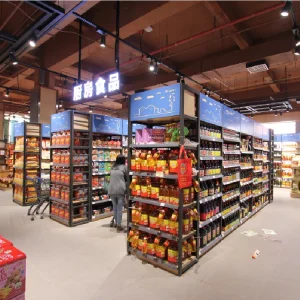
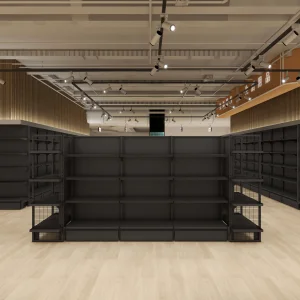
Explore our state-of-the-art heavy duty cantilever racking and premium store display systems engineered for absolute load integrity.
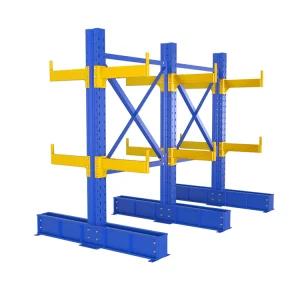
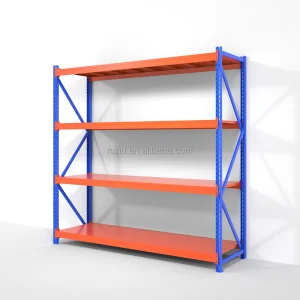
Modern global warehousing is shifting rapidly toward automated, high-density environments. Within this transformation, storing long, heavy, and non-standardized loads—such as steel piping, structural timber, metal sheets, extruded profiles, and heavy machinery components—presents unique spatial challenges. Traditional pallet racking systems fail when handling these payloads due to the physical constraint of front vertical columns, which block long items and limit handling flexibility.
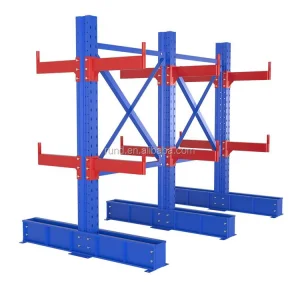
This is where heavy storage shelf cantilever racks become indispensable. Engineered without front upright columns, cantilever racks offer an unobstructed horizontal storage span. This design permits seamless loading and unloading by forklifts, overhead cranes, or automated storage and retrieval systems (AS/RS). In today's highly competitive industrial landscape, choosing the correct cantilever system configuration directly impacts floor space utilization, operational safety, and overall supply chain velocity.
Cantilever rack safety relies on precise engineering. Every component must be calculated to withstand tremendous bending moments and shear stresses. The system comprises four essential components:
| Structural Parameter | Standard Specifications | Heavy-Duty Industrial Capabilities |
|---|---|---|
| Material Grade Selection | High-yield Q235B Carbon Steel | Q355B Low-alloy High-strength Structural Steel |
| Load Capacity (Per Arm) | 300 kg to 1,000 kg (Light to Medium Duty) | 1,500 kg to 3,000+ kg (Structural Custom Arm Load) |
| Finishing & Corrosion Protection | Standard Powder Coated (60-80 microns thickness) | Hot-Dip Galvanized (HDG) & ISO-certified Anti-static Coatings |
| Structural Compliance standards | RMI Guidelines (USA), EN 15620 (Europe) | AS4084:2012 (Australia), TÜV Rheinland Audited Quality Control |
Established in 2019, built on 8 years of industry experience and 5 years of global export track record. We maintain strict compliance under TÜV Rheinland and AS4084 standards using advanced automated equipment.
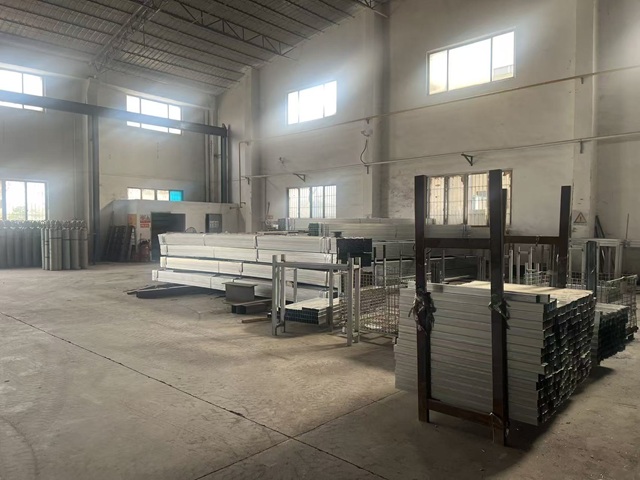
Premium Q235B/Q355B structural steel coils inspected for chemical composition and tensile strength consistency.
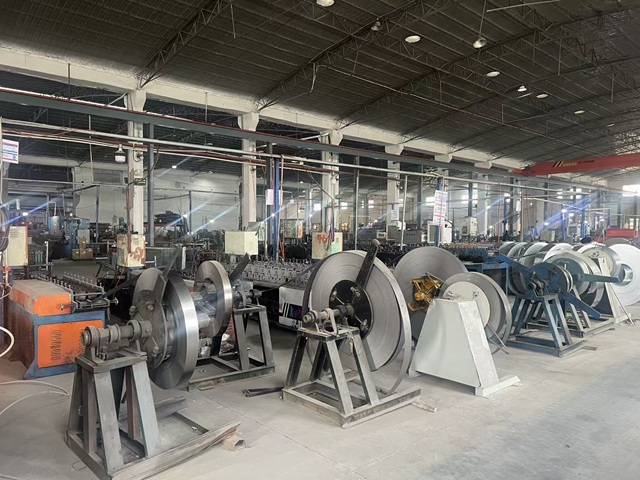
Cold-roll forming machinery contours profiles continuously to assure perfect load distribution across sections.
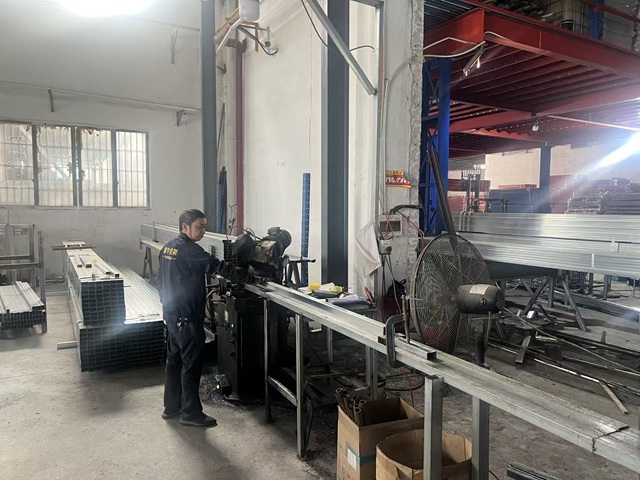
High-speed hydraulic shears cut formed beams to precise designed lengths with minimum tolerance limits.
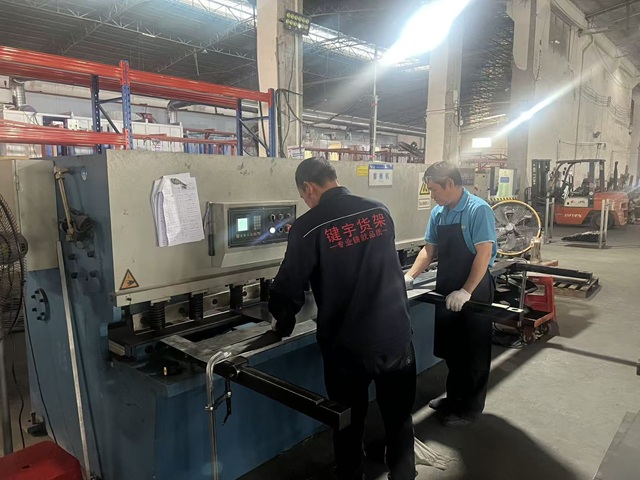
CNC-controlled bending systems form bracket connections, maintaining geometric angle consistency.
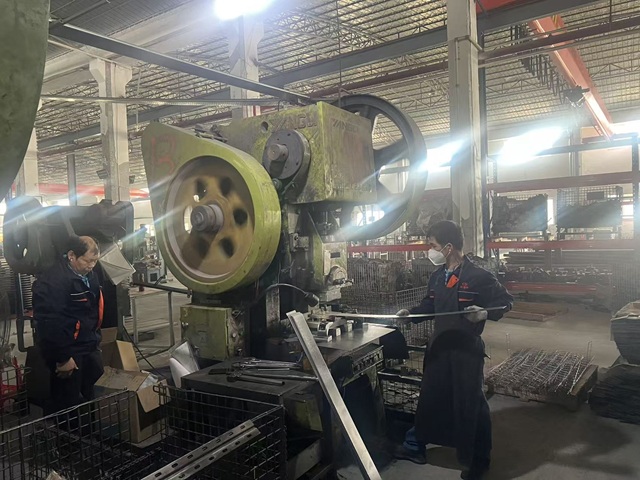
Multi-station punch presses cut adjustability slots along columns with micrometric pitch precision.
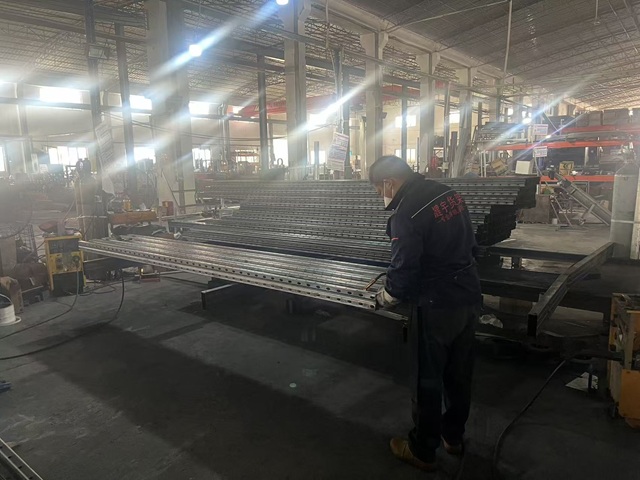
Robotic MIG welding stations apply uniform structural welds to optimize joint strength and fatigue limits.
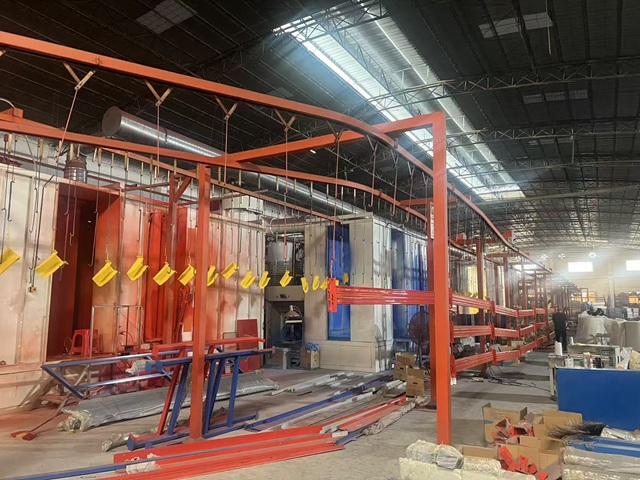
Multi-stage pre-treatment and electrostatic spray painting ensure maximum corrosion resistance and durability.
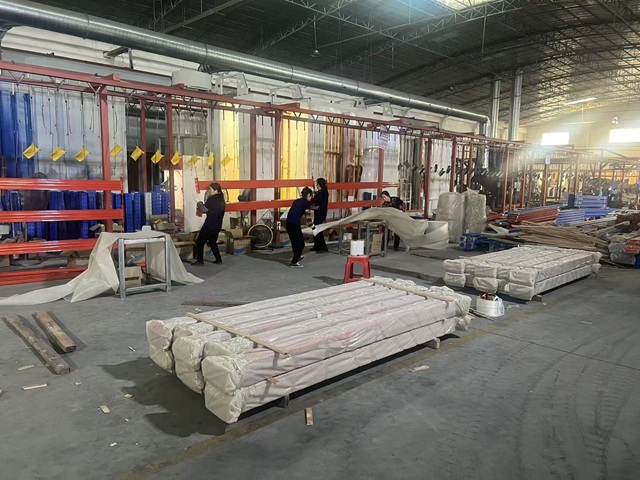
Export-standard secure packaging with protective wrapping avoids shipping damages during transit.
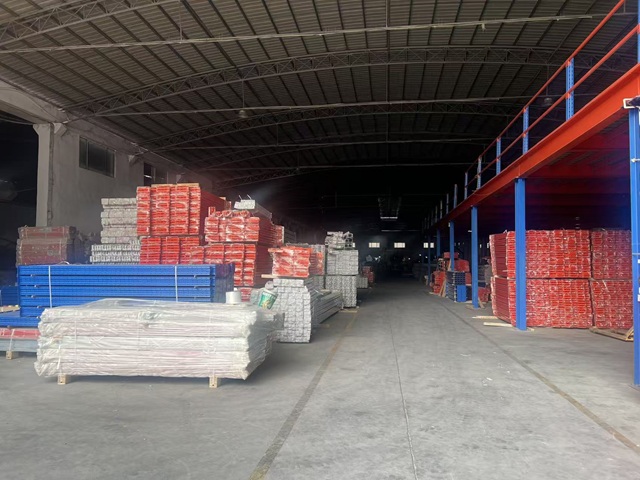
Inventory management controls optimized for high-efficiency dispatch and container logistics.
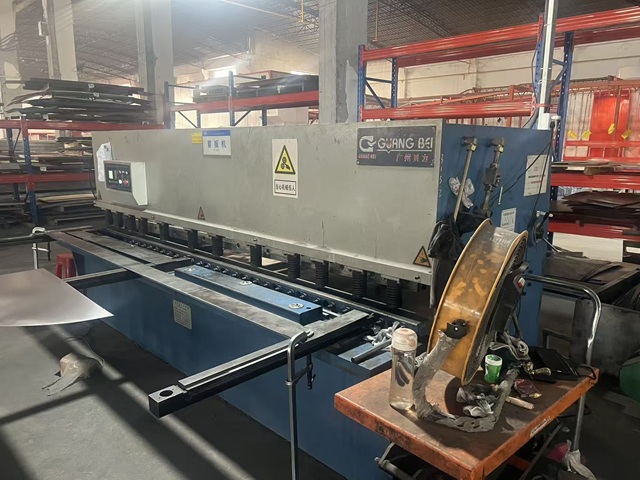
Precise metal forming tool assuring identical dimensions across custom component designs.
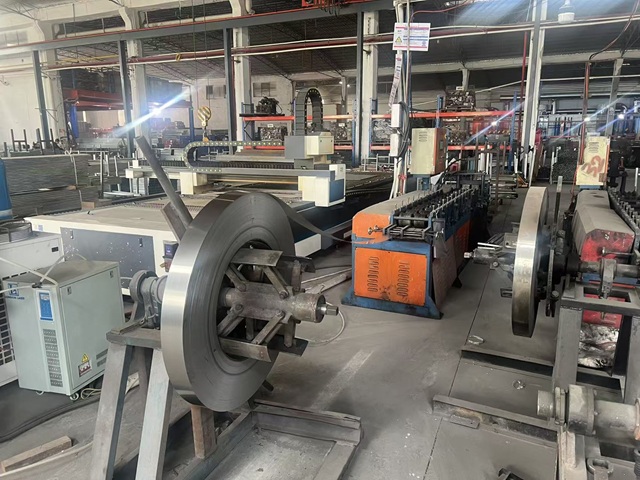
Fully automated profile extrusion and rolling setup operating for maximum throughput.
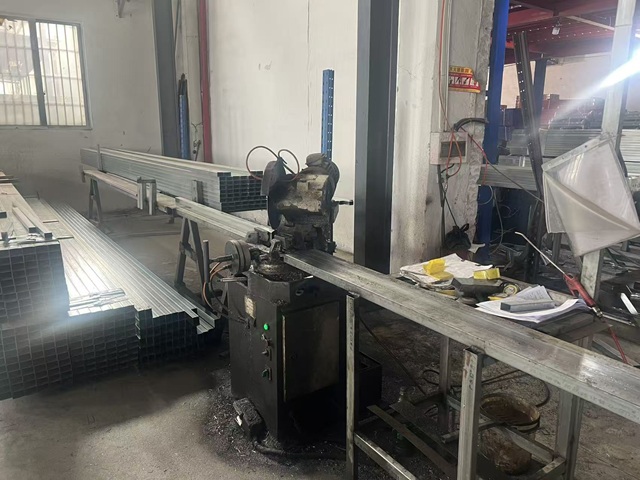
Engineered for fast, distortion-free cutting of high-thickness raw structural steel sheets.
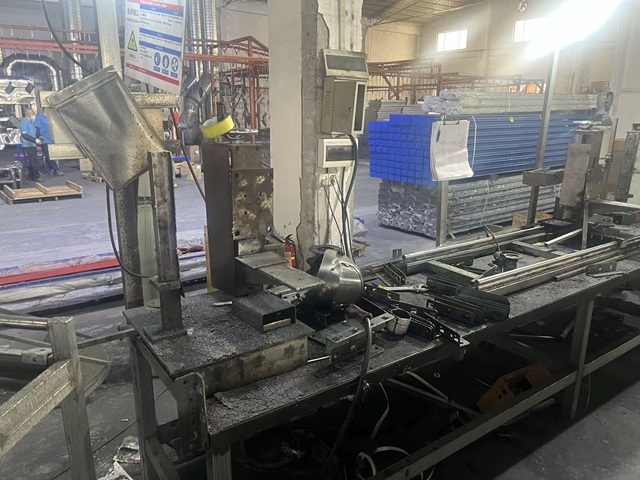
Dual-shield gas metal arc welding equipment optimizing deep fusion at structural joints.
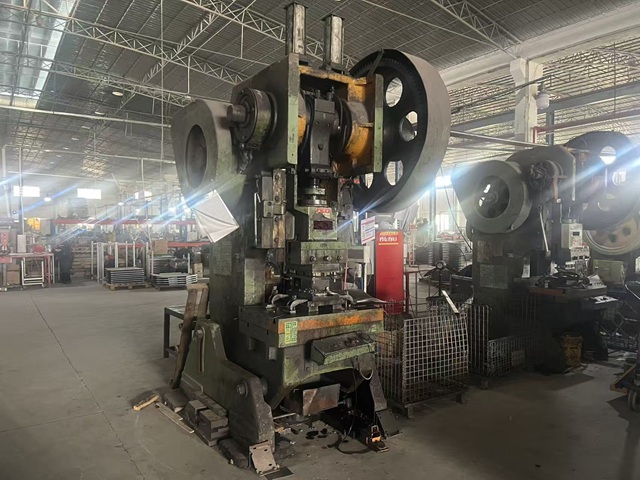
Industrial high-tonnage stamping machine generating clean, repeatable connection slots.
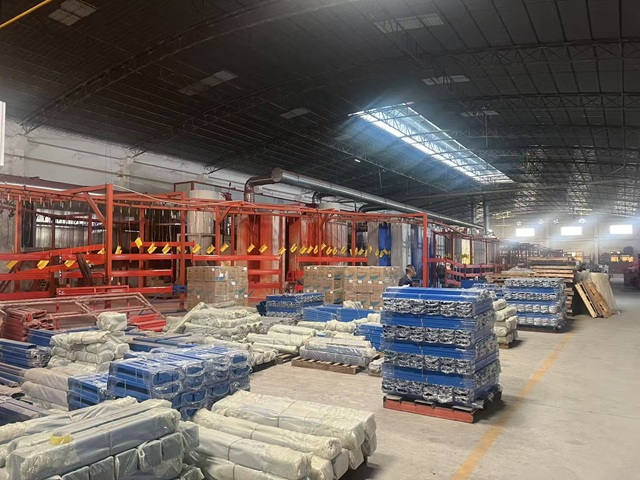
Eco-friendly closed powder coating loop system delivering standard weather protection.
How our cantilever racking adapts to unique logistical and structural conditions across global geographies.
Designed for machinery manufacturing hubs, storing heavy forged steel shafts, oversized industrial gears, and heavy profiles. Systems feature high-durability epoxy finishes to withstand hot, dust-heavy environments without degrading.
Engineered with increased seismic factor calculation metrics, customized column-base welding details, and oversized concrete floor anchors to satisfy stringent structural regulations for regions prone to ground acceleration.
Fully Hot-Dip Galvanized (HDG) rack installations resistant to sub-zero temperatures, freezing moisture, and high salt winds. These configurations avoid structural oxidation and steel embrittlement in harsh outdoor locations.
The structural integrity of industrial racking starts with its raw steel supply chain. Chengdu EcosystemRack partners with 450 reliable steel and hardware vendors, securing stable steel pricing even during market volatility. This allows us to offer competitive, factory-direct wholesale pricing to industrial users and racking distributors worldwide.
Our strategic location in western China's manufacturing corridor provides convenient logistics access to the China-Europe Railway Express and international ocean shipping routes. This ensures dependable lead times for massive structural racking orders. By maintaining our own high-capacity, automated manufacturing lines, we bypass third-party fabrication markups, offering direct economic savings without compromising materials or assembly quality.
Furthermore, our 25 R&D engineers released 45 new product designs last year, continuously optimizing steel profiles to reduce structural deadweight while preserving high carrying capacities. This lightweighting technology saves up to 15% on international freight costs for buyers.
Where the industrial racking industry is heading over the next decade.
Modern distribution warehouses rely on speed. The future of cantilever racking lies in seamless pairing with stacker cranes and automated guided vehicles (AGVs). These automated systems optimize storage density while keeping personnel safe by removing manual forklift operations.
By installing strain-gauge and load-monitoring sensors directly within the cantilever arms, warehouses can track load limits in real time. These smart systems flag uneven loading, excessive arm deflection, or seismic displacement before structural failures occur.
To support environmental goals, the racking industry is moving toward low-emission powder coatings. These newer finishes provide excellent corrosion resistance, high chemical durability, and lower carbon footprints during the curing stage.
EcosystemRack ensures compliance by checking our materials against national and international load regulations. Every structure undergoes Finite Element Analysis (FEA) to confirm stability under regional seismic, soil, and wind conditions.
Importing heavy industrial equipment requires navigating local engineering codes, construction permits, and safety standards. EcosystemRack streamlines this process by supplying certified structural engineering documents and detailed static analysis reports with our systems.
For distributors in North America, Eastern Europe, Central Asia, and East Asia, we work directly with local system integrators to adapt layouts to regional building regulations. Our designs include calculations for horizontal deflection limits, base plate dimensions, anchor shear ratings, and column wind load resistance for outdoor setups.
Get authoritative answers to technical engineering and logistical questions concerning heavy duty storage systems.
Roll-formed cantilever racks are fabricated from high-strength sheet steel that is cold-formed into C-channels. They are cost-effective, lighter, and suitable for light-to-medium loads with standard forklift usage. Structural steel cantilever racks, conversely, are manufactured from hot-rolled I-beams. They offer exceptional impact resistance, making them ideal for heavy scrap yards, timber mills, and harsh environments where heavy forklift strikes are common.
Under international codes like RMI and AS4084, arm deflection limits are typically calculated using the L/300 formula, where L is the arm length. For a 1200mm arm, the vertical deflection at maximum safe load should not exceed 4mm. Exceeding this limit indicates overloading or improper weight distribution, which can lead to fatigue failure. Our 25 R&D engineers run FEA simulations on every design to verify safety margins.
For outdoor storage in damp or high-humidity regions, we recommend Hot-Dip Galvanization (HDG). In this process, structural steel is dipped in molten zinc, creating a thick, durable alloy layer that protects against rust. For indoor or controlled environments, our multi-stage electrostatic powder coating (60-80 microns thickness) provides excellent impact resistance and a clean, long-lasting finish.
Yes. Our vertical columns feature punched connection slots at 75mm or 100mm increments, allowing you to easily adjust storage spacing as inventory requirements change. The arms connect to the columns using heavy-duty bracket plates secured by a high-tensile locking pin. This pin prevents the arm from shifting upwards during loading or unloading, keeping the system stable without requiring special tools for adjustment.
For standard designs, our lead time typically ranges from 20 to 30 days. Custom OEM/ODM structural systems that require engineering calculation sheets, finite element analysis (FEA), and custom punching dies are processed in 30 to 45 days. We coordinate directly with global freight forwarders to ensure efficient container loading and reliable dispatch to Eastern Europe, Central Asia, and East Asia.
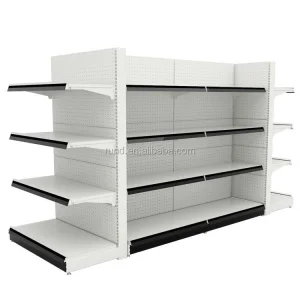
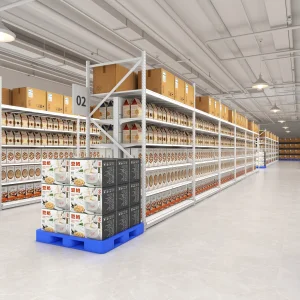
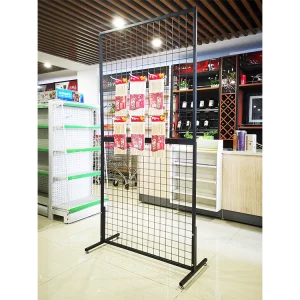
Heavy-duty industrial storage racks and specialized commercial shelving designed for maximum operational efficiency.
 EcosystemRack