Global buyers are rethinking storage as e-commerce, smaller facilities, and flexible workspaces reshape demand. The U.S. Census Bureau reported that U.S. retail e-commerce sales reached approximately $1.19 trillion in 2024, representing 16.1% of total retail sales. This growth increases pressure on warehouses, shops, workshops, and home-organization areas to use space more efficiently. Folding Shelves can respond by collapsing during transport, opening when needed, and adapting to changing floor plans.
Yet flexibility alone does not guarantee a reliable purchase. The International Organization for Standardization emphasizes consistent testing, documented specifications, and risk-based quality management across manufacturing processes. Buyers should therefore examine load capacity, shelf deflection, locking mechanisms, hinge durability, corrosion resistance, packaging quality, and replacement-part availability. A compact shelf may save freight space. It may also become unstable if its frame is poorly braced or overloaded.
This guide reviews ten practical types of Folding Shelves for international buyers, including wall-mounted, freestanding, rolling, warehouse, retail, garage, kitchen, and heavy-duty models. Each type serves a different environment. Some prioritize portability. Others favor daily load performance. The best choice depends on product weight, folding frequency, available clearance, installation conditions, and local safety expectations. There is no universal winner. That assumption needs challenging.
Real purchasing decisions often expose overlooked details. A shelf can look strong in photographs but feel awkward during assembly. A low price can hide thin panels, weak hinges, or costly replacement freight. Buyers should compare verified product data, inspection records, technical drawings, and supplier experience before ordering. This approach supports safer sourcing, clearer communication, and more dependable long-term value.
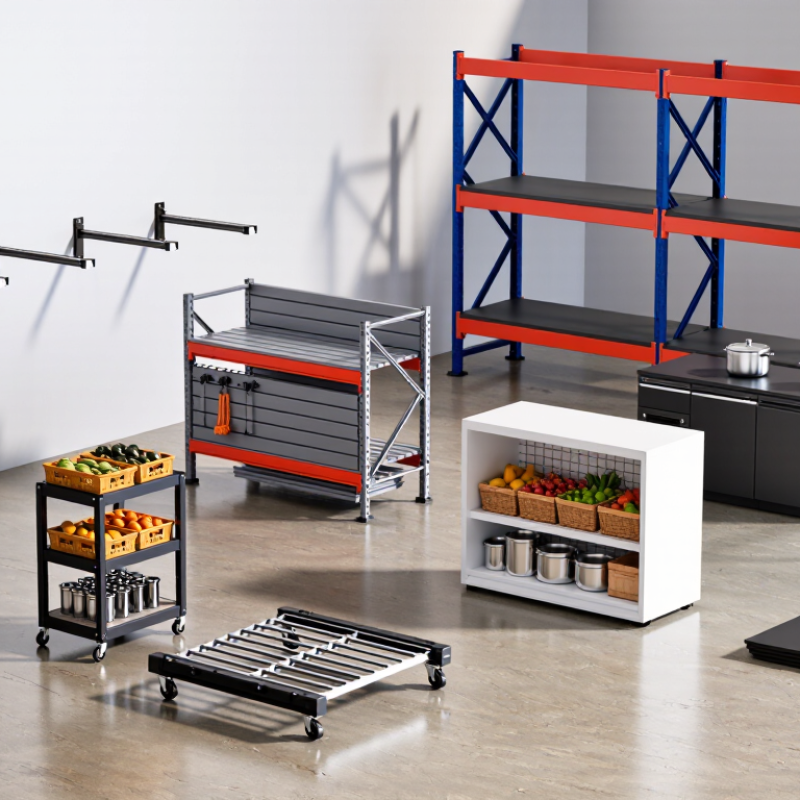
What Folding Shelves Are and How They Work
Top 10 Types of Folding Shelves for Global Buyers
What Folding Shelves Are and How They Work
Folding shelves are storage units designed to collapse, move, or open quickly. They usually combine hinged panels, folding legs, locking pins, and load-bearing brackets. When opened, these parts form a stable horizontal surface. When closed, they reduce volume for transport or storage. This simple action can save warehouse space and lower handling effort.
Their performance depends on the hinge design, material thickness, joint strength, and locking system. Steel frames suit heavier loads, while aluminum or engineered boards reduce total weight. A shelf may look strong but still fail at its hinge. In real warehouse checks, loose pins and uneven floors cause many avoidable problems. Buyers should inspect working load limits, folded dimensions, corrosion resistance, and replacement-part availability. Grand View Research valued the global furniture market at approximately USD 516.66 billion in 2023, with continued growth expected through 2030. This broader trend supports demand for flexible storage, but it does not prove every folding shelf is durable.
Tips: Measure the folded unit first. Confirm the opened depth, lock position, and usable load. Ask for test reports based on recognized safety standards. A clear photo is not enough. Also, leave a safety margin below the stated capacity; real conditions are rarely perfect.
Key Features and Materials of Folding Shelves
Folding shelves serve global buyers in many settings, from compact kitchens to temporary trade displays. Common types include wall-mounted, rolling, ladder-style, camping, shoe, garage, utility, corner, display, and kitchen shelves. Each design balances portability, load capacity, and storage space. A locking hinge is essential because loose joints can cause sudden movement. Rounded edges also reduce damage during frequent handling. In my experience, shelves with visible hinge stops feel safer and easier to inspect.
Material choice affects durability and shipping weight. Powder-coated steel supports heavier tools and resists surface wear. Aluminum is lighter, but it may flex under uneven loads. Solid wood offers warmth and strong visual appeal, though humidity can cause swelling. Engineered wood costs less, but its edge quality needs careful checking. Plastic works well for light household goods and damp areas.
No material is perfect.
Buyers should question advertised capacity, especially when shelves are folded and unfolded daily.
Tips: Check the opened dimensions, folded thickness, hinge quality, and maximum load before ordering. Test the shelf on a level floor and distribute weight evenly. Ask suppliers for material thickness, coating details, and hinge-cycle information. A small sample can reveal rattling, sharp edges, or weak fasteners. I once underestimated packaging space; the shelf fit perfectly, but the protective carton did not. That detail deserves more attention.
How Global Buyers Can Compare Folding Shelf Types
Top 10 Types of Folding Shelves for Global Buyers
How Global Buyers Can Compare Folding Shelf Types
Global buyers should compare folding shelves by use, load, folded size, and installation method. Common options include wall-mounted, freestanding, rolling, ladder-style, corner, drop-leaf, accordion, over-door, modular, and outdoor folding shelves. Each type solves a different space problem. A warehouse may need rolling shelves, while a small apartment may favor a wall-mounted design.
Market data supports careful comparison. Grand View Research valued the global furniture market at approximately US$652 billion in 2023. Its analysis also identifies space efficiency and flexible furniture as important demand factors. The Freedonia Group’s furniture research highlights durability, material choice, and distribution requirements as key purchasing considerations. These findings suggest that buyers should assess more than appearance.
Check the shelf’s tested load rating, hinge strength, coating, and locking system. Ask for product drawings and folded dimensions. Measure a real doorway, not only the room. For steel shelves, inspect welds and powder-coat coverage. For engineered wood, examine edge sealing near moisture. Load ratings can be confusing. Some suppliers report evenly distributed weight, while others use point loading. Compare the same test basis.
A useful evaluation sheet scores capacity, portability, setup time, repair access, packaging, and total landed cost. Packaging deserves attention; damaged corners create unnecessary waste. I have seen attractive shelves fail because their hinges loosened after repeated folding. That detail is easy to miss. Certification documents, factory inspection records, and clear warranty terms improve purchasing reliability, although paperwork alone cannot replace physical testing.
Conclusion
Folding Shelves are versatile storage solutions designed to open, close, or collapse through hinged, sliding, or adjustable structures. They are useful in homes, offices, retail spaces, warehouses, exhibitions, and temporary facilities because they can save space when not in use and provide organized storage when assembled. The main types include wall-mounted, freestanding, rolling, corner, ladder-style, collapsible crate, tiered, hanging, modular, and heavy-duty folding shelves. Each type offers different advantages in terms of capacity, mobility, accessibility, and installation.
When comparing Folding Shelves, global buyers should examine load-bearing capacity, folded size, dimensions, stability, assembly requirements, surface treatment, and material options such as steel, aluminum, wood, plastic, or mixed construction. Buyers should also consider durability, corrosion resistance, packaging, shipping volume, customization, quality inspection, and after-sales support. A careful comparison of intended use, available space, budget, import requirements, and transportation conditions can help international purchasers select safe, practical, and cost-effective shelving solutions for different markets.
 EcosystemRack
