China Top Mobile Shelving Suppliers How to Choose?

Time:2026-09-20 Author:Sienna
0%

Choosing among China’s top Mobile Shelving suppliers requires more than comparing prices. It requires evidence, site experience, and careful technical judgment. China’s National Bureau of Statistics reported that the country’s total retail sales reached RMB 47.15 trillion in 2024, increasing pressure on warehouses, archives, and distribution centers to use space efficiently. Meanwhile, Grand View Research valued the global warehouse automation market at approximately USD 20.37 billion in 2023, with strong growth expected through 2030. Mobile Shelving belongs to this wider efficiency movement, but it is not automatically the right answer.

Storage consultant John M. Hill states, “The cheapest shelf is rarely the cheapest system.” This practical warning deserves attention. A low quotation may exclude floor reinforcement, anti-tip protection, installation, software integration, or after-sales service. Those missing details become expensive when loaded carriages move unevenly across a warehouse floor.

A reliable supplier should provide load calculations, rail tolerances, corrosion protection data, motor specifications, safety sensors, and installation references. Ask for a factory audit or a live project visit. Check whether the supplier follows relevant quality systems, such as ISO 9001, and whether electrical components meet the destination market’s requirements. Certification alone is not enough.

Measure your actual inventory. Boxes, files, spare parts, and medical records need different layouts. Consider aisle access, picking frequency, humidity, fire protection, and future expansion. A supplier that only discusses storage volume may be overlooking operational risk. That is a warning sign.

The best choice is rarely the most impressive brochure. It is the supplier that documents performance, admits limitations, and supports the system after delivery. Even this approach is imperfect. Real warehouses change. Your evaluation should leave room for that reality.

China Top Mobile Shelving Suppliers How to Choose?

Define Mobile Shelving: Up to 80% More Storage Density and 50% Fewer Aisles

China Top Mobile Shelving Suppliers: How to Choose?

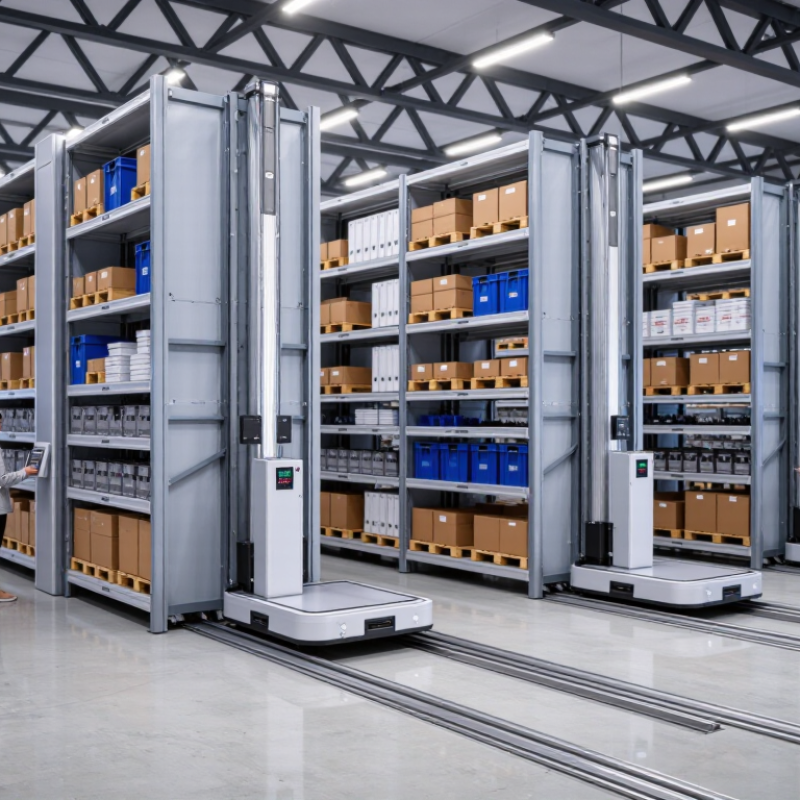
Mobile shelving uses floor tracks and movable carriages. It can deliver up to 80% more storage density and 50% fewer aisles than fixed shelving, depending on layout and inventory. The real benefit is visible in a compact archive: rows close together, then one aisle opening only where needed. These figures are industry benchmarks, not automatic results. Measure your room first.

The 2024 MHI Annual Industry Report found that 83% of supply-chain leaders expect technology to create competitive advantage. However, technology must fit daily work. When comparing Chinese suppliers, request load calculations, rail specifications, emergency-stop details, and cycle-test records. Check whether the system supports your container sizes, floor tolerance, and climate conditions. A lower quote may hide weaker motors or limited after-sales support. That mistake is expensive.

Tips: Ask for a factory video, sample drawings, and two recent export references. Confirm inspection stages before shipment. Use a third-party inspection when practical. Suppliers should explain installation, spare parts, warranty response, and operator training clearly. The 2023 Zebra Global Warehousing Study reported that 58% of warehouse decision-makers planned RFID deployment by 2028, showing a wider shift toward smarter storage. Still, mobile shelving is not automatically “smart.” Integrate sensors only when they solve a clear access or safety problem. Measure twice. A neat spreadsheet can still mislead.

China Top Mobile Shelving Suppliers How to Choose? - Define Mobile Shelving: Up to 80% More Storage Density and 50% Fewer Aisles

Selection Dimension What to Evaluate Typical Planning Data Recommended Verification Method Why It Matters
System Definition Motorized or mechanically assisted shelving mounted on movable bases, with controlled access aisles. One or more movable rows can share a smaller number of access aisles than fixed shelving. Request a scaled layout showing closed and fully open positions, aisle access, emergency exits, and service clearances. Confirms that the proposed system is genuinely mobile shelving rather than conventional fixed shelving.
Storage-Density Target Comparison with the existing fixed-shelving layout using the same room area, shelf height, load type, and access requirements. Common project claims range from 20% to 80% more usable storage density; the actual result depends on the baseline layout. Compare usable shelf length or pallet positions per square metre before and after installation. “Up to 80% more” is a potential planning outcome, not a guaranteed result for every room or product category.
Aisle Reduction Number of permanently open aisles required for daily operation and emergency access. A 50% reduction in permanently open aisles may be achievable where multiple fixed aisles are consolidated into fewer movable access aisles. Check the aisle count on the complete floor plan and confirm that operational and fire-safety routes remain compliant. Fewer aisles can release floor area for storage, but safety routes must never be removed without approval.
Load Capacity Rated load per shelf, bay, carriage, and total moving base, including evenly distributed and point loads. Light-duty shelving is often rated below 150 kg per shelf; heavy-duty systems can exceed 500 kg per shelf. Ratings vary by design. Require stamped load tables, structural calculations, test records, and a clearly stated safety factor. Overloading can deform shelves, overload drive components, and create serious operational hazards.
Aisle Width Clear operating width for staff, carts, forklifts, stored materials, and emergency access. Personnel aisles are commonly planned around 900–1,200 mm; equipment aisles may require substantially more. Verify the proposed width against the handling equipment, local building regulations, fire code, and accessibility requirements. Aisle width directly affects safety, picking speed, equipment compatibility, and the final storage-density calculation.
Drive and Control Drive motor, gearbox, variable-speed control, manual override, soft start and stop, and aisle selection controls. Variable-speed drives and soft stopping help reduce mechanical shock and product movement. Request a live demonstration with the intended maximum load and review the control-system documentation. Reliable movement improves access time, reduces wear, and helps protect stored materials.
Safety Protection Presence sensors, emergency-stop buttons, obstruction detection, anti-collision protection, end stops, and overload protection. Emergency-stop controls should be accessible from operating positions; sensor coverage must protect the complete moving aisle. Perform a documented safety test under empty and loaded conditions before acceptance. Safety functions are essential because the system creates powered moving zones and changing access aisles.
Floor and Installation Floor flatness, load-bearing capacity, anchoring, power supply, drainage, and installation tolerances. The building floor must support both static storage loads and concentrated wheel or rail loads. Obtain a floor survey and structural review before final design; do not rely only on nominal slab thickness. Uneven or insufficient flooring can cause alignment problems, noise, uneven loading, and premature wear.
Environmental Suitability Temperature, humidity, dust, corrosion risk, clean-room requirements, and fire-protection conditions. Standard indoor systems are not automatically suitable for cold storage, high humidity, corrosive areas, or clean rooms. Match the materials, coatings, electrical protection, seals, and fire strategy to the operating environment. Environmental mismatch can shorten service life and invalidate performance or warranty conditions.
Energy and Operation Motor power, standby consumption, access frequency, control logic, and manual operating capability during power loss. Energy use depends on carriage mass, travel distance, load, acceleration, and daily movement cycles. Ask for measured energy data under a defined duty cycle instead of relying on a generic annual estimate. Operating data helps calculate total cost of ownership and supports energy-management goals.
Serviceability Availability of spare parts, preventive-maintenance schedule, fault diagnostics, response time, and technician coverage. A written preventive-maintenance plan should cover drives, chains or belts, sensors, brakes, controls, and structural fasteners. Review the service agreement, spare-parts list, training plan, and documented response times. Fast recovery is important because one inaccessible aisle can affect a large portion of the stored inventory.
Total Cost of Ownership Equipment price, installation, civil work, electrical work, software, training, maintenance, energy, and future expansion. The lowest purchase price does not necessarily provide the lowest cost per usable storage position. Compare quotations using the same capacity, shelf dimensions, load rating, safety scope, warranty, and lifecycle assumptions. A normalized comparison prevents hidden exclusions from distorting supplier selection.
Supplier Qualification Relevant project experience, technical documentation, quality controls, testing procedures, delivery capability, and after-sales support. A qualified supplier should provide layout drawings, load calculations, risk assessments, manuals, inspection records, and commissioning documents. Request comparable project references without evaluating a proposal solely on product price. Documentation and support capability are strong indicators of installation quality and long-term reliability.

Planning note: Storage-density and aisle-reduction percentages are comparison benchmarks, not universal guarantees. Final performance depends on room geometry, shelf dimensions, load requirements, aisle width, safety regulations, access frequency, and the existing storage layout.

Classify China Suppliers by System Type, Load Capacity, and Industry Standards

China Top Mobile Shelving Suppliers: How to Choose?

Classify suppliers by system type before comparing prices. Manual mobile shelving suits libraries, archives, and light storage. Electric systems support wider aisles and heavier loads. Automated systems add sensors, controls, and stronger maintenance requirements. Ask for layout drawings, rail details, and emergency stopping procedures. A polished catalog is not enough.

Load capacity must match real operating conditions. Check the rated load per shelf, bay, carriage, and floor section. A supplier should provide structural calculations and test records. For example, small archive shelves may hold 80 to 150 kilograms per level. Industrial pallet systems require far higher ratings and careful load distribution. Confirm the number of cycles expected each day. Capacity labels can still be misunderstood.

Industry standards reveal how seriously a supplier manages risk. Review quality systems such as ISO 9001, while checking local fire, electrical, and building requirements. EN 15635 may help when assessing storage equipment safety practices. Certification alone does not prove installation quality. Request material certificates, welding inspection records, user manuals, and references from similar facilities. Visit a working installation when possible.

I have seen projects fail because floor flatness was ignored. That detail deserves more attention.

Also examine warranty terms, spare-part access, software support, and technician response times. A lower quotation may hide long-term service gaps.

Compare Rail Precision, Safety Features, Energy Use, and EN 15635 Compliance

When choosing China’s top mobile shelving suppliers, inspect rail precision before comparing prices. Uneven rails create vibration, noise, and difficult movement. Ask for measured tolerances, installation records, and load tests from similar projects.

Safety needs practical evidence. Look for anti-tip systems, aisle access controls, emergency stops, and clear load labels. EN 15635 emphasizes proper use, regular inspections, damage reporting, and competent maintenance. A supplier should provide inspection guidance, training documents, and a process for replacing damaged parts. Do not accept a certificate alone. Its scope may not cover your complete installation.

Tips: Request a live demonstration with fully loaded carriages. Check whether movement stops when a person enters the aisle. Review standby power consumption and operating wattage. Efficient motors, LED lighting, and automatic sleep modes can reduce energy use. However, claimed savings may change with traffic, shelf weight, and room temperature. Measure your actual usage if possible.

In my experience, rail alignment is often underestimated during installation. Small foundation errors can become expensive later. Ask who verifies the floor, rails, anchoring, and final clearances. Compare maintenance response times, spare-part availability, and inspection schedules, not only the purchase quotation. A reliable supplier accepts difficult questions and records limitations openly. Perfect installations are rare. That is worth remembering.

Audit Factory Quality Through ISO 9001, Load Testing, and Production Records

China Top Mobile Shelving Suppliers: How to Choose?

A factory audit should begin with its ISO 9001 system, not a polished showroom. Request the certificate, issuing body, scope, and expiry date. The certificate should cover shelving design and production. Then compare written procedures with actual workshop practices. Are incoming steel coils inspected? Are welding settings recorded? Are defective parts clearly separated? Small gaps matter. An impressive certificate cannot replace daily control.

Load testing reveals whether a mobile shelving system performs under realistic pressure. Ask for test reports showing rack dimensions, load levels, test duration, and failure points. Check whether the tested structure matches your proposed order. A stronger-looking frame may still twist if the base is uneven. During an audit, inspect torque records, weld samples, coating thickness, and assembly checks. Repeated measurements build confidence. One test is not enough.

Tips: Ask to review recent production records, not prepared examples. Match order numbers with material certificates, inspection sheets, and final packing photos. Check whether records identify inspectors and approval dates. Speak with the quality manager and production supervisor separately. Their answers should align. If records look perfect, question why. Real factories usually show a few corrected issues. That honesty can be more reliable than flawless paperwork. Keep your own audit notes, including photos, sample readings, and unanswered questions.

Calculate Total Cost Using MOQ, Lead Time, Installation, Warranty, and 10-Year ROI

China Top Mobile Shelving Suppliers: How to Choose?

Compare total ownership cost, not the lowest factory price. Request the MOQ, unit price, packaging, inland freight, export charges, and estimated lead time. A 100-bay order at $420 per bay equals $42,000. However, a 300-bay MOQ may reduce the unit price to $385, while tying up an additional $77,000 in inventory. That cash cost matters. Deloitte’s 2023 Global Smart Manufacturing Survey found that 86% of manufacturers consider smart manufacturing important for future competitiveness. Shelving should support that goal through accurate space use and reliable access.

Lead time can create hidden losses. If production takes 45 days and shipping takes 30 days, plan for at least 75 days. Add installation, floor preparation, commissioning, and staff training. For example, $8,000 in installation plus $3,000 for preparation raises the initial investment to $53,000. A six-week delay could also require $2,500 monthly temporary storage. Ask suppliers for installation drawings and a written remedy for delays. Experience shows that vague delivery promises cause more trouble than a slightly higher quotation.

For a ten-year ROI, record annual labor savings, recovered floor space, maintenance, downtime, and replacement parts. Suppose the system saves $18,000 yearly, costs $1,800 in maintenance, and requires $53,000 upfront. Ten-year net benefit equals $162,000, producing approximately 206% ROI. This estimate is not perfect. Warranty length, excluded components, and local service response can change it sharply. Check warranty terms line by line. MHI’s 2024 Annual Industry Report continues to identify labor pressure and inventory visibility as major supply-chain concerns. Suppliers should provide test records, load calculations, references, and clear after-sales support.

FAQS

How should I classify mobile shelving suppliers?

Classify them by system type, capacity, and relevant industry standards. Manual systems suit libraries, archives, and lighter storage. Electric systems handle wider aisles and heavier loads. Automated systems add sensors, controls, and maintenance needs. A polished catalog is insufficient.

What documents should I request before selecting a supplier?

Request layout drawings, rail details, emergency stopping procedures, and structural calculations. Ask for material certificates, welding records, test reports, and user manuals. References from similar facilities are useful. Visit a working installation when possible. Details can expose weak planning.

How can I verify the stated load capacity?

Check the rated load per shelf, bay, carriage, and floor section. Compare ratings with real storage weights and daily operating cycles. Small archive shelves may hold 80 to 150 kilograms per level. Industrial pallet storage requires much higher ratings and careful load distribution. Labels can still confuse.

What should I inspect during a factory quality audit?

Review the quality certificate, issuing body, scope, and expiry date. Confirm that it covers shelving design and production. Inspect incoming steel checks, welding settings, coating thickness, and defect separation. Ask for recent production records, not prepared examples. Small gaps matter.

How can load testing reveal production weaknesses?

Request test reports showing dimensions, load levels, test duration, and failure points. Confirm that tested structures match your proposed order. Inspect torque records, weld samples, assembly checks, and measurement logs. An uneven base can twist a strong-looking frame. One test is not enough.

What costs should be included beyond the quoted unit price?

Include minimum order quantity, packaging, inland freight, export charges, installation, and floor preparation. Add commissioning, staff training, maintenance, spare parts, and temporary storage. For example, 100 bays at $420 each equal $42,000. A larger minimum order may lower unit cost but tie up more cash. That cash matters.

How should I evaluate delivery time and warranty support?

Combine production, shipping, installation, preparation, and training timelines. A 45-day production period and 30-day shipment require at least 75 days. Ask for installation drawings and written remedies for delays. Review warranty exclusions line by line. Vague promises create trouble.

How can I estimate a ten-year return on investment?

Record labor savings, recovered floor space, maintenance, downtime, and replacement parts. For example, $18,000 yearly savings minus $1,800 maintenance creates $16,200 annual benefit. With a $53,000 initial cost, the ten-year net benefit is about $162,000. The estimated return is roughly 206 percent. It will not be perfect. Service delays can change everything.

Conclusion

Choosing the right China Mobile Shelving supplier requires more than comparing prices. Mobile Shelving systems can increase storage density by up to 80% while reducing aisles by as much as 50%, making them valuable for archives, warehouses, offices, and industrial facilities. Buyers should first classify suppliers by system type, load capacity, customization ability, and relevant industry standards. Key comparisons should include rail precision, structural stability, anti-tip and access safety features, energy consumption, and compliance with EN 15635 where applicable.

A reliable supplier should provide evidence of ISO 9001 quality management, documented load testing, material traceability, and complete production records. Before placing an order, calculate the total cost based on MOQ, lead time, delivery, installation, training, warranty coverage, maintenance, and expected service life. A ten-year ROI analysis can reveal whether a lower purchase price truly offers better value. Careful factory audits, technical verification, and transparent communication will help buyers select a dependable solution with safe performance and predictable long-term costs.

Sienna

Sienna

Sienna is a skilled marketing professional with a deep expertise in our company’s core products and services. With a passion for innovation and detail, she plays a pivotal role in crafting insightful blog posts that not only highlight the unique features of our offerings but also provide valuable......