Choosing a supplier for Stackable Storage involves more than comparing catalog photos and unit prices. Buyers need products that fit their space, carry the intended load, and remain stable when stacked. China has a broad manufacturing base, with suppliers offering plastic bins, warehouse totes, folding crates, and modular storage boxes. Capabilities vary, though. A familiar product name does not guarantee consistent dimensions or quality between production runs.
This guide introduces ten China-based manufacturers for buyers to consider. It highlights practical factors such as product range, material options, customization, quality checks, and export support. Small details matter. A lid that fits poorly, a rough edge, or a slightly uneven base can cause trouble across a full warehouse order. Buyers should check stated dimensions, load ratings, resin information, and stacking guidance against their actual use. Requesting samples can reveal details that a brochure cannot.
A shortlist is only a starting point. Supplier websites and product descriptions may not show how a factory handles repeat orders, packaging, or quality concerns. Ask for current specifications, sample approval procedures, and clear answers about lead times before committing. Compare like with like: wall thickness, usable internal space, closure style, and carton quantity can all affect value. Some information may remain difficult to verify remotely, so treat rankings as a research aid, not a guarantee. The right manufacturer is the one whose documented capabilities match your requirements—and whose communication stays precise when questions become specific.
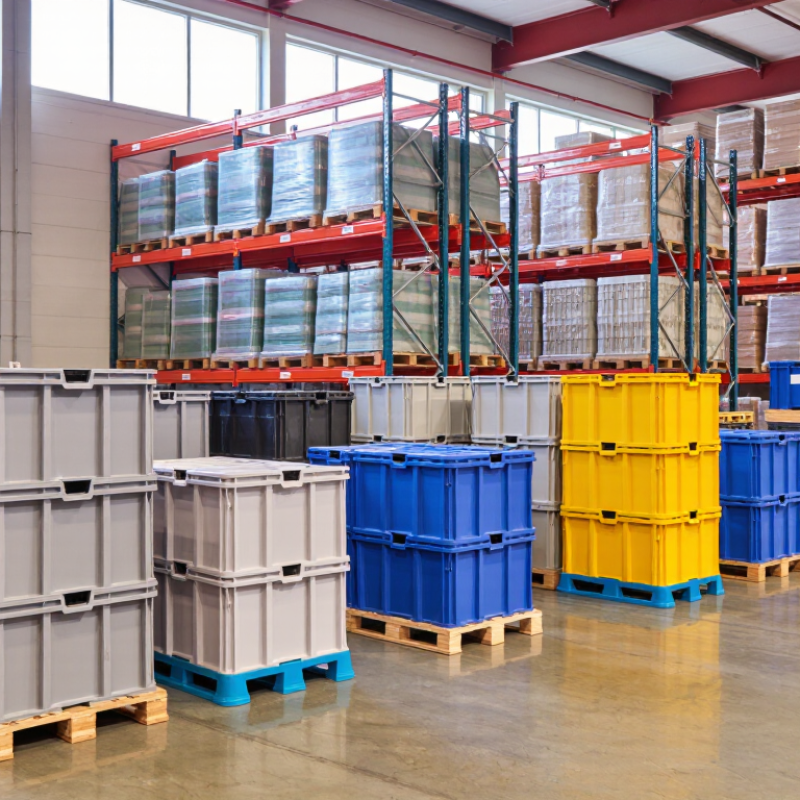
Stackable storage products are containers, totes, crates, and shelving designed to use vertical space. They suit warehouses, workshops, retail back rooms, and household storage. A lidded tote can protect seasonal stock from dust; an open-front bin keeps small parts visible and reachable. When empty, some nest inside one another, saving return-trip space. Simple, but useful.
The MHI and Deloitte 2024 Annual Industry Report found that 55% of surveyed supply-chain professionals planned to increase investment in technology over the next five years. Stackable storage is not automation, yet orderly, consistent units can support clearer picking and inventory routines. Choose by load capacity, dimensions, material, and access needs—not appearance alone. Measure shelf depth first. A stack that overhangs can become unstable. For heavy goods, check the maker’s stated stacking limit and keep loads evenly distributed. Some bins claim to stack, but lids or uneven floors can make real-world results less tidy. That detail is easy to miss.
China’s stackable storage manufacturing landscape includes factories producing plastic bins, reusable crates, and modular containers for warehouses, shops, and homes. Common processes include injection molding, while heavier or larger products may use other forming methods. Capabilities vary by factory, so buyers should check the actual production process rather than rely on a catalog image.
Design details matter. A well-made bin should stack without rocking, keep its rim from deforming under load, and remain easy to separate when empty. Ask for material specifications, dimensions, sample units, and test conditions. A practical check is to stack loaded samples on a level floor and inspect them after several days. Not every sample tells the full story. Production consistency can still be a concern.
Manufacturers may offer custom colors, lids, labels, or dimensions, but changes can affect tooling costs and delivery schedules. Clarify whether samples match the intended production material and finish. It helps to document load limits and stacking height in writing. Small differences matter. Measuring a sample with a tape measure and checking its fit against existing shelving can reveal issues early. Some buyers overlook that step.
China’s Stackable Storage Manufacturing Landscape — a buyer-oriented comparison of common plastics used in storage products.
The bars show the midpoint of each material’s typical density range in g/cm³, not manufacturers’ production shares or product weights. Polypropylene and polyethylene are common choices for storage containers; density alone does not determine strength, durability, or suitability.
China’s stackable-storage manufacturers serve homes, workshops, shops, and warehouses. These ten profiles focus on production strengths rather than company names. One factory may specialize in heavy-duty bins with reinforced corners. Another may produce nesting boxes that save shelf space when empty. Fit matters.
Other profiles cover folding crates, ventilated produce containers, lidded household totes, and small-parts organizers with removable dividers. Some makers offer custom dimensions or colors, while others concentrate on standard sizes and larger production runs. A further profile focuses on clear containers, where consistent wall thickness helps keep contents visible. Another emphasizes warehouse totes designed for repeated handling.
The remaining profiles highlight mold development, export packaging, and custom product design. These are useful distinctions, but they do not guarantee consistent quality. Buyers should request material details, load ratings, and sample units before comparing quotations. Check how lids align, whether stacked containers wobble, and how handles feel under load. A glossy catalog can hide a weak hinge or uneven base. I would also verify delivery schedules and inspection procedures in writing; these details are easy to overlook during early discussions.
When comparing stackable storage manufacturers, look beyond catalog photos. Ask for the usable internal dimensions, resin type, wall thickness, and tested load limits. A box may stack neatly when empty but bow under weight. Request compression-test results, ideally linked to a recognized method such as ASTM D642. Fit matters. Check whether lids, handles, and pallet footprints work with your existing storage system.
Compare like with like. Ask each supplier to quote the same size, material, order quantity, and delivery terms. Check both static and moving-load ratings, and request samples for a real stacking test. Place the boxes on a slightly uneven floor; inspect corner alignment, lid closure, and deformation after loading. It is easy to overlook small details. Confirm sample quality against production specifications, plus lead times, minimum order quantities, and how defects are handled.
Digital visibility is another useful comparison point. MHI’s 2024 Annual Industry Report found that 55% of surveyed supply-chain professionals planned to increase technology investment. For buyers, this makes clear order tracking and production updates worth asking about. Still, a polished dashboard does not prove consistent product quality. Review test records, material documentation, and sample-to-production controls. I would also ask how recycled content is verified; supplier claims can be vague, and that deserves a closer look.
This comparison covers ten common stackable storage product options available from manufacturers. It is a product-category guide, not a verified ranking of individual factories. Confirm dimensions, load ratings, materials, testing, and certifications directly with each supplier.
| Product Option | Common Material | Stacking Design | Typical Applications | Buyer Comparison Points | Details to Confirm with the Manufacturer |
|---|---|---|---|---|---|
| Injection-Molded Stackable Tote | Polypropylene (PP) or high-density polyethylene (HDPE) | Rigid walls and reinforced rims help containers stack when loaded. | Warehousing, parts storage, distribution, and general-purpose handling. | Compare usable capacity, wall thickness, handholds, lid options, and compatibility with existing systems. | External and internal dimensions, empty weight, rated load, stacking limit, resin specification, and available colors. |
| Heavy-Duty Industrial Crate | Usually HDPE or impact-modified PP | Reinforced corners and rims support stable stacking; some designs interlock. | Repeated handling of heavier goods in warehouses, factories, and distribution operations. | Check structural reinforcement, impact resistance, handling comfort, and whether the crate suits manual or automated workflows. | Load ratings and test conditions, stacking height guidance, operating temperature range, and replacement-part availability. |
| Stack-and-Nest Container | Commonly PP or HDPE | Stacks in one orientation and nests inside another when rotated, reducing empty-container volume. | Return logistics, food distribution, retail replenishment, and operations with backhauls. | Compare nesting ratio, stack stability, nesting stops, and ease of separating nested containers. | Stacked and nested dimensions, nesting ratio, lid compatibility, load guidance, and cleaning requirements. |
| Attached-Lid Container | PP or HDPE | Hinged lids close over the contents; molded features allow closed containers to stack. | Parcel distribution, reusable transport packaging, and secure storage of small goods. | Assess hinge durability, closure security, seal options, and whether the lid remains attached during handling. | Internal capacity, closure style, hinge-cycle test results, tamper-evident options, and stacking compatibility. |
| Folding Stackable Crate | Typically PP | Side panels fold down when empty; erected crates are designed to stack. | Reusable transport, retail supply chains, and applications where return volume matters. | Compare folded height, locking mechanism, assembly effort, and panel durability over repeated cycles. | Open and folded dimensions, folding-cycle test results, load guidance, lid availability, and repair options. |
| Euro-Footprint Storage Box | PP or HDPE | Designed around commonly used modular footprints, including 600 × 400 mm formats. | Warehouses and production lines using standardized racks, pallets, or material-handling systems. | Verify footprint compatibility rather than relying on the format name; compare internal capacity and base design. | Exact external dimensions, base type, dimensional tolerances, conveyor suitability, and compatibility with the buyer’s equipment. |
| Ventilated Produce Crate | Food-contact-grade PP or HDPE, when specified and supported by documentation | Ventilated sidewalls and a reinforced rim provide airflow and allow stacking. | Handling and transport of produce and other goods that benefit from ventilation. | Compare opening pattern, airflow, cleanability, drainage, and protection against product damage. | Food-contact documentation for the intended market, usable dimensions, load guidance, cleaning method, and temperature limits. |
| Solid-Wall Warehouse Bin | PP or HDPE | Solid sides protect contents; molded rims or corner features support stacking. | Small parts, components, supplies, and storage areas where contents need enclosure. | Check access openings, label areas, divider options, and whether bins remain stable when partially loaded. | Available sizes, divider and label options, stacking limits, wall construction, and compatibility with shelving. |
| Corrugated Plastic Storage Box | Fluted polypropylene sheet | Folded panels and reinforced edges create a lightweight box; stackability depends on design and load. | Lightweight packaging, temporary storage, and applications requiring printable or custom-cut panels. | Compare sheet thickness, flute structure, edge reinforcement, moisture resistance, and ease of assembly. | Board thickness and weight, box dimensions, stacking test results, print options, and suitability for repeated use. |
| Stackable Parts Bin | PP or HDPE | Open-front bins stack or hang on compatible rails and panels, depending on the system. | Picking stations, workshops, assembly lines, and organized storage of small components. | Compare opening size, access when stacked, divider options, label area, and system compatibility. | Exact bin dimensions, rail or panel compatibility, divider availability, load guidance, and color options. |
Comparison note: Material choice alone does not determine performance. Resin grade, product geometry, manufacturing quality, test method, and actual operating conditions all affect durability and load capacity. Do not treat a supplier’s unverified rating as a universal standard.
When comparing stackable storage manufacturers in China, buyers should look beyond quoted unit prices. Request a current product specification, material details, carton dimensions, and the planned production schedule. Ask how the supplier controls changes between the approved sample and mass production. A neat sample can be misleading.
For stackable products, check whether loaded units remain stable and fit together without excessive force. Agree on a practical load test based on your intended use, and record the test conditions. Inspect wall thickness, lid fit, sharp edges, and color consistency across several cartons. Small details matter. A sample cannot reveal every production shift, so arrange an inspection during production or before shipment when order value warrants it. Keep written acceptance criteria; vague phrases like “good quality” are hard to enforce.
Logistics can change the true cost. Confirm carton count, pallet dimensions, gross weight, and container loading plans before booking freight. Ask for photos of packed goods and verify that cartons protect corners and prevent surface scratches. Clarify who handles export documents, booking updates, and delays. Leave time for rework. Buyers sometimes focus so much on factory pricing that they overlook storage fees or a delivery window that is too tight. Recheck the plan. Shipping estimates are not guarantees.
They include containers, totes, crates, and shelving designed to use vertical space. Simple, but useful.
Warehouses, workshops, retail back rooms, and homes can all use it. An open-front bin keeps small parts visible.
Some empty containers fit inside one another, reducing space needed for storage or return trips. Check the fit before ordering.
Measure shelf depth and container dimensions. A stack that extends beyond the shelf may become unstable.
Check the stated stacking limit for heavy goods. Keep loads evenly distributed, and use a level surface. Measure first.
Compare material, dimensions, load ratings, and access needs. Appearance alone tells you little.
See whether lids align and stacked containers wobble. Test how handles feel under load, too. Small details matter.
Consistent units can support clearer picking and inventory routines. They are not automation, though. I would not expect tidy bins to fix every process.
This guide introduces Stackable Storage products, explaining how their space-saving design supports organization, handling, and storage across different settings. It also outlines China’s manufacturing landscape and presents profiles of ten Chinese manufacturers, helping buyers understand the range of suppliers and product options available without focusing on any single brand.
For practical supplier selection, the article highlights how to compare product materials, dimensions, load capacity, customization options, production capabilities, and communication. It also covers key steps in sourcing, including requesting samples, checking product quality and consistency, confirming specifications, and planning packaging, shipping, and delivery schedules. Together, these considerations can help buyers make informed decisions and manage the purchasing process more effectively.

EcosystemRack